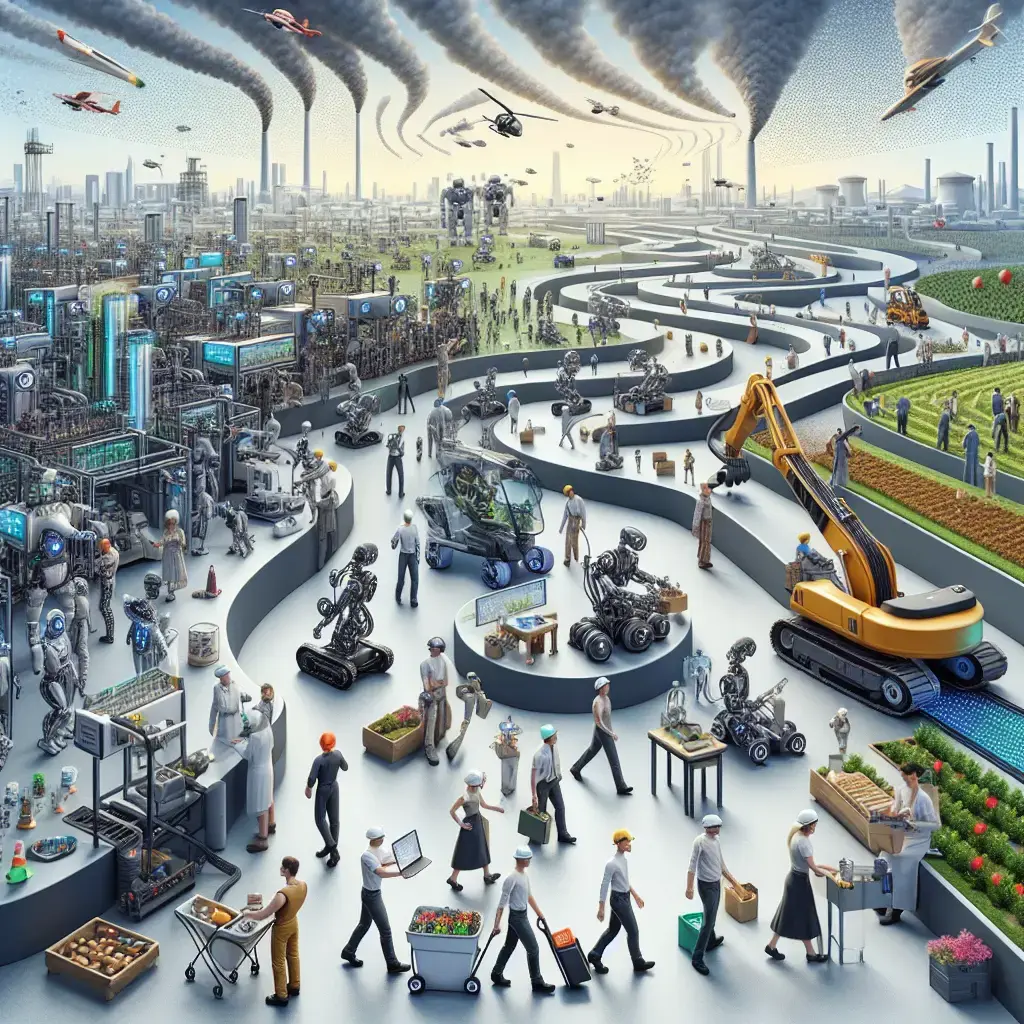
The Future of Work: How Automation is Changing Career Paths
In today's rapidly evolving landscape, automation is redefining the future of work and dramatically reshaping career paths. As we stand on the brink of significant technological advancements, it's imperative to understand how automation and AI are influencing employment dynamics and what this means for the workforce.
Automation Trends Redefining Traditional Roles
The impact of automation on jobs is profound, leading to a redefinition of traditional roles across various industries. The integration of technology in the workplace has prompted a shift that demands new skills for future jobs. For instance, the rise of automation trends in manufacturing and service sectors is creating a ripple effect, necessitating workers to adapt by developing future workforce skills. According to a report by McKinsey Global Institute, nearly 375 million workers may need to switch occupational categories by 2030 due to these technological shifts.
AI and Job Transformation: Not Just Buzzwords
AI and job transformation are not merely buzzwords; they signify a new era where career changes due to automation are increasingly common. The widespread discussions surrounding AI advancements raise questions about employment security and the necessity for individuals to adapt. Recent innovations, such as the development of advanced machines like the F-35 fighter jet, showcase how technology is transforming job roles from traditional manual tasks to more strategic, technology-driven functions.
Universal Basic Income: A Solution or a Pipe Dream?
As automation continues to evolve, there's growing discourse around Universal Basic Income (UBI) as a potential solution to job displacement. The titans of AI argue that while automation might take over certain jobs, UBI could provide a safety net for those affected. However, the feasibility of implementing such a system remains contentious. A study by the World Economic Forum highlights both the potential benefits and challenges of UBI, including funding mechanisms and social implications.
Skills for Future Jobs: Adapting to Automation
Adapting to automation requires proactive measures in skill development. Professionals must focus on acquiring skills that align with emerging demands in the future job market. Industries are seeking talent equipped with expertise in areas like data analysis, AI programming, and digital marketing—a field where human intuition still plays a critical role despite technological advancements, as noted in Forbes.
Key Skills to Develop:
- Data Analysis
- AI and Machine Learning
- Digital Literacy
- Emotional Intelligence
- Critical Thinking
Case Study: The Gaming Industry's Adaptation
The gaming industry offers an intriguing case study of how sectors adapt to technological changes. Titles like SteamWorld Heist 2 demonstrate how creative industries are evolving. While maintaining their core strategy elements, these games integrate new technologies to enhance user experience and require developers to adapt by mastering new programming skills.
Automation and Career Development: Embracing Change
The era of unprecedented change due to automation presents unique opportunities for growth and innovation in career development. Embracing these changes requires a mindset shift among professionals, urging them to reconsider their career development strategies. According to Harvard Business Review, organizations must foster a culture of continuous learning and adaptability to remain competitive in this new landscape.
Challenges and Opportunities in Workforce Automation
While workforce automation offers numerous advantages such as increased operational efficiencies, it also poses challenges like job displacement and skill mismatches. It's crucial for both individuals and organizations to stay informed and prepared for these changes. As noted in a recent article by BBC, staying ahead involves understanding job automation effects and leveraging technology to enhance human potential rather than replace it.
Strategies for Success:
- Continuous Skill Development
- Leveraging Technology for Innovation
- Encouraging Cross-functional Collaboration
- Building Resilience in Career Paths
Conclusion
As we navigate the profound shifts in the job market driven by automation and AI, it becomes evident that both challenges and opportunities abound. Traditional roles are being redefined, with automation trends compelling workers to acquire new skills for future jobs. This evolution is not merely a disruption but a call to adapt and thrive in a technology-driven world.
With nearly 375 million workers potentially needing to transition into new roles by 2030, skill development in areas like data analysis, AI, and digital literacy is paramount. The gaming industry exemplifies this shift, adapting to technological advancements while maintaining creative integrity.
AI and automation are transforming job roles from manual tasks to strategic endeavors, demanding a workforce equipped with emotional intelligence and critical thinking. The ongoing discussion around Universal Basic Income highlights the societal need to address job displacement, though its feasibility remains under debate. Meanwhile, embracing continuous learning and adaptability can empower professionals to leverage technology for innovation rather than see it as a threat.
Organizations must foster a culture of resilience and cross-functional collaboration to remain competitive in this ever-evolving landscape. By doing so, they can turn potential job displacement into opportunities for growth and career development.
We stand at the cusp of remarkable change. How will you navigate this landscape? Share your experiences or insights on embracing automation and transforming your career path. Let's foster a dialogue that inspires action and further exploration into the future of work.
For those eager to delve deeper, resources such as McKinsey Global Institute and Harvard Business Review offer invaluable insights. Together, let's embrace the changes ahead with open minds and a readiness to redefine success in our careers.
Author: Olivia Harper